Game Development Research Centre

What happens to a game studio when its workforce grows from four to fifteen people? Why can a close-knit team that works well together suddenly start experiencing problems as the studio grows? And how can collaboration remain successful in the long run? These are the questions at the heart of John Johansson’s research.
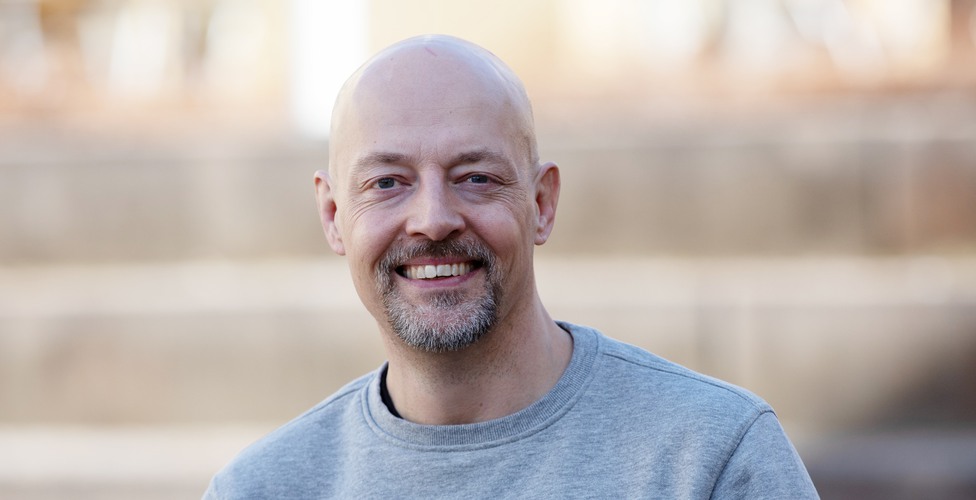
John Johansson is a PhD student within Game Development Research Centre, at Karlstad University.
“I’m going to look at teams that make games and what makes those teams get better or worse over time. That’s how I usually explain my work to my dad,” says John.
Since 1 May, John Johansson has been a PhD student at the Game Development Research Centre. For the past six years, he has worked as a Lecturer in Project Management and Leadership at Karlstad University, where he has taught aspiring producers in game development. The games industry has therefore become a natural area for him to focus on. Unlike many other types of projects, a game development team consists of a wide range of different areas of expertise – from programming and design to sound and art.
“Everyone needs to pull towards the same direction to create the experience the game is intended to deliver. But it’s not always that simple,” he says.
John Johansson explains that research shows that unclear roles can lead to higher workloads and lower job satisfaction. And as a company grows, the conditions for collaboration change. Routines that work well in a small team can suddenly become inadequate.
This is where John’s research comes in. He is going to investigate how collaboration within game development teams evolves over time, looking at issues including roles, information sharing, gender differences and so-called social debt – problems that build up over time and risk making the studio less efficient.
“I want to understand how to improve teamwork and how we can make use of a group’s collective intelligence. To get there, studios need to ask themselves quite a few questions.”
The research field is still relatively unexplored. Game development differs from software development, which has been the subject of considerably more research. The next step is therefore to work more closely with game studios through workshops and surveys, among other activities.
The goal is set. In time, the research should be able to provide producers and other game developers with practical tools for building teams that work as effectively as possible.
“I’d be really happy if I could provide producers with practical advice on how to create groups that can collaborate better. I can’t say I’d die happy if I managed that, but I’d certainly be a little happier.”
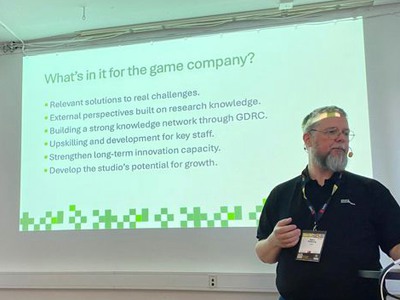
The research is also part of a larger context. Through the Game Development Research Centre, new opportunities are being created for academia and the games industry to meet and develop knowledge together. For John, it is an opportunity to help explore an area where much remains untested.
“There’s a lot of power in the breadth of expertise within GDRC. We’re helping to build something new in terms of how academia and the games industry can work together. We’re breaking new ground and creating new forms of collaboration.”