Better Games Through Collaboration Between Research and Development

On Thursday 12 November, researchers from the Game Development Research Centre (GDRC) and Master's students from Karlstad University visited the extensive Embracer Games Archive in Karlstad.
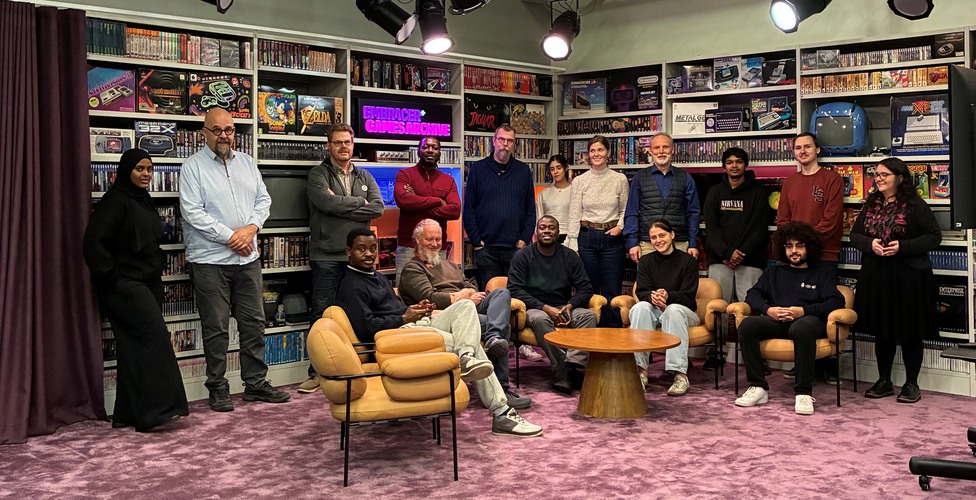
The visit was attended by Producer students, Master's students in Informatics, lecturers from Karlstad University and researchers from the GDRC.
Embracer Games Archive houses more than 80,000 items, including games, consoles and various gaming accessories.
“The students' reactions were very positive. Naturally, the games in the archive are old, but many of the students recognised a great number of them and had personal connections with older games too,” says John Johansson, PhD student at the GDRC and Karlstad University.
Chief Archivist Natalia Kovalainen welcomed the group and guided them around the archive. One of the students asked whether games in their original packaging would be even more impressive to have in the archive. Natalia explained that plastic and other packaging materials can damage the games over time, which is why all games are removed from their packaging to ensure their long-term preservation.
“Natalia also spoke enthusiastically about several of her favourite games. She showed us the Japanese precursor to Resident Evil and other horror games. Her anecdotes about games and game developers seemed endless,” says John Johansson.
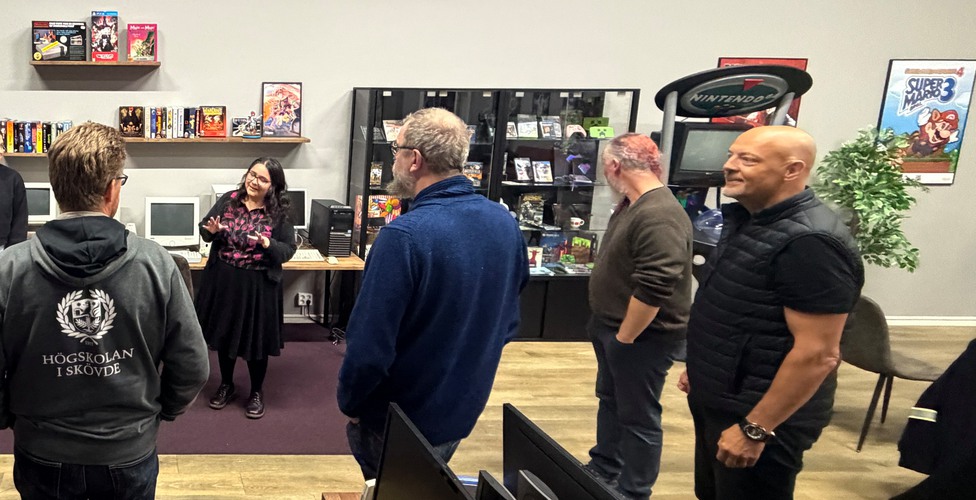
Natalia Kovalainen tells Torbjörn Svensson, Ulf Wilhelmsson, Casey O'Donnell and John Johansson more about the archive.
The purpose of the visit was to introduce the GDRC and Michigan-based Casey O’Donnell, who has been a visiting researcher at the University of Skövde and the GDRC during the autumn, to the archive.
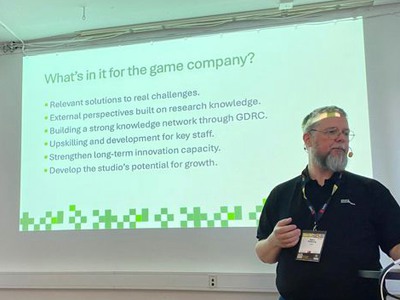
Earlier in the day, Casey O’Donnell gave a lecture to the Master's students about his research and his views on AI in the games industry. He explained that his research always takes a long time.
“I spent several years at the first game studios I studied. Some days, things happen; on other days, nothing much happens. You have to allow the process to take its time. This research eventually became my book, Developer's Dilemma.”
Casey also described the current situation regarding AI.
“Management may be considering whether more could be done with AI, while employees may be wondering whether they will still have a job. At the same time, many are experimenting with AI in their day-to-day work. This creates a complex situation that calls for dialogue, experimentation and learning.”