Mahesh Kumbhar
School of Engineering Science

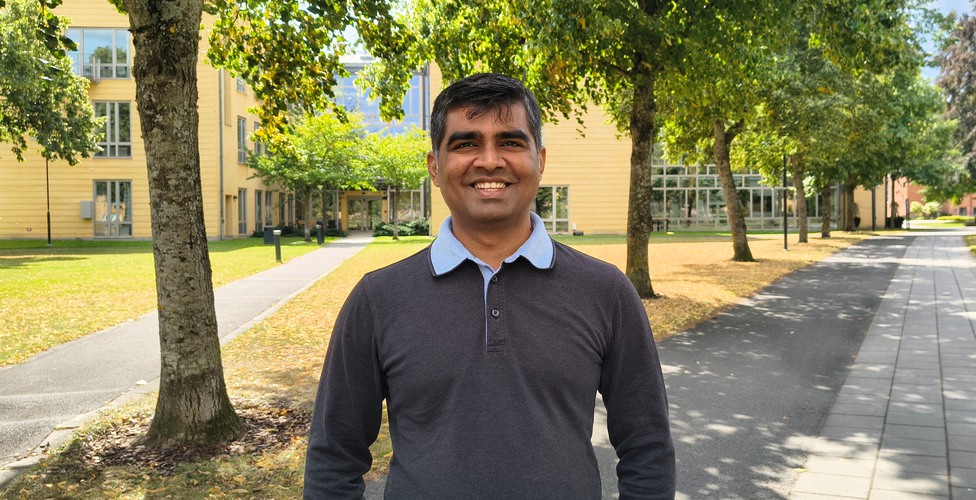
Mahesh Kumbhar defends his thesis "Multifaceted Data Analytics for Integrated Improvement of Manufacturing Systems".
The public defence will be livestreamed and can be followed online from 09:15 (CEST).
Watch Mahesh Kumbhar's public defence via livestream
The manufacturing industry is increasingly adopting end-to-end digitalization to remain competitive in the current market environment. Most modern manufacturing companies collect large volumes of operational data from enterprise systems to drive improvements. However, isolated improvement actions may not lead to an overall increase in system performance. Achieving impactful gains at the manufacturing system level requires an integrated approach that considers the relationships among the three core shop-floor operations: production, quality, and maintenance. Mapping these relationships is also essential for understanding how problems and actions in one operation affect others.
This thesis aims to support the integrated improvement of shop-floor operations in discrete manufacturing by (1) investigating the use of diagnostic and prescriptive analytics for effective throughput and energy bottleneck analysis, (2) addressing the imbalanced product quality data to improve predictive performance and identify critical process parameters, and (3) analyzing unlabeled health monitoring data from industrial machines for condition-based maintenance. These focus areas correspond to key challenges in production, quality, and maintenance operations. Firstly, production operations consist of multiple interdependent resources, and maximizing system performance requires efficient utilization and management of bottleneck resources. However, identifying, diagnosing, and prescribing improvement actions for these bottlenecks can be difficult due to the limited integration of heterogeneous data sources. Secondly, product quality depends on numerous process and operational parameters, such as machine operating conditions and material properties. Identifying the parameters that govern consistent quality is particularly challenging because defects are typically low-probability events. Finally, continuous monitoring and condition-based maintenance of components such as machine tool ballscrews remain difficult due to the lack of labeled data, reliance on manual feature engineering, and localized degradation characteristics.
The main contributions of this thesis are: (1) a digital twin framework for bottleneck analysis through data integration, process mining of event logs, discrete-event modeling, simulation-based optimization, and knowledge discovery, (2) an imbalanced oversampling method that generates synthetic minority defect samples in the casting process data while identifying important parameters through Bayesian reinforcement, and (3) an anomaly detection framework that detects and localizes developing defects in ballscrew drive systems using unlabeled health monitoring data. Together, these contributions transform multi-source shop-floor data into analytical insights and prescriptive actions that support the integrated improvement of manufacturing systems.
2026. Doctoral thesis.