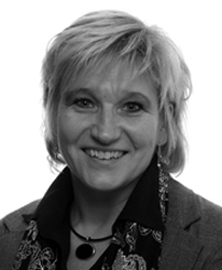
Hanife Rexhepi
Associate Professor of Informatics

When welfare technology becomes a central part of elderly care, the need to understand how it affects people in practice increases. This project examines the technology and investigates both its benefits and risks, as well as how digital solutions shape relationships, quality of life and autonomy.

"This research can make a difference for the public by helping ensure that technologies in elderly care support people rather than intrude on them. By shedding light on both risks and what works well, the research helps promote digital solutions that feel respectful, trustworthy and rooted in everyday human needs and values."
Hanife Rexhepi, Project Manager and Associate Professor of Informatics
In Sweden, as in many other European countries, the proportion of people aged 65 and older is increasing rapidly, while the number of health and social care workers continues to decline.
This combination places growing pressure on existing elderly care services and highlights the need for new and practical solutions.
One such approach is the use of welfare technology, which includes digital tools and devices used in home- or residential care, such as sensors, GPS alarms, digital reminders, and other forms of digital support.
The technology is used to maintain or increase security, activity, participation or independence for elderly or for people with a disability.
However, there is limited evidence to support the anticipated benefits of welfare technology. Few studies have examined the real-world effects of the technology, and existing research is often narrow in scope. At the same time, the implementation of such technologies raises significant ethical concerns that, while widely discussed in theory, are frequently given limited attention in practice.
As a result, elderly care is increasingly relying on technologies whose effects on quality of life and ethical implications remain insufficiently understood.
Based on these insights, this project aims to support a widespread adoption of welfare technology that is both effective and ethically responsible, ensuring they uphold the privacy and autonomy of older persons.
By addressing key practical challenges and ethical considerations faced by older persons using welfare technology as well as by their informal (e.g. families) and formal (e.g. healthcare professionals) caregivers the project seeks to support the development and use of technologies that enhance quality of life, safety and independence, while fostering trust and safeguarding rights.