


Anna-Karin Pernestig
School of Bioscience



The Infection Biology research group at the University of Skövde conducts research on infections, inflammatory diseases and biological systems. Using AI, mathematical and statistical models, the group aims to contribute to earlier diagnosis of sepsis, a better understanding of immunological processes and new ways of analysing complex biological data.
The research group combines biological expertise with data-driven analytical methods. By studying biological data from infections and inflammatory diseases, the researchers aim to understand how disease processes develop and how they can be detected earlier.
The Infection Biology research group develops AI- and systems biology-based platforms to improve the understanding, detection and prediction of diseases.
By combining genomics, that is, analyses of the genome, with molecular signatures, patterns in the body’s biological processes, the researchers can contribute to precision diagnostics and predictive modelling. The aim is to develop more accurate diagnoses, better prognoses and a deeper understanding of complex biological systems.
The work is based on an interdisciplinary combination of infection biology, microbiology, immunology, systems biology, mathematical modelling and statistical analysis.
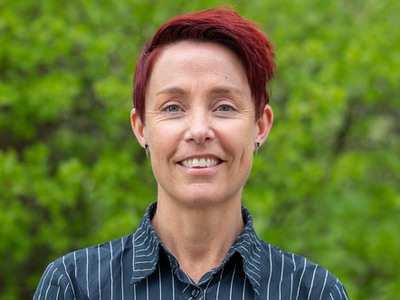
"Our research is about understanding what happens in the body during infection and inflammation. By using biological data and statistical models, we can identify patterns that would otherwise be difficult to detect. This can contribute to improved diagnostics and greater knowledge of serious conditions such as sepsis."
Anna-Karin Pernestig, Research Group Leader and Senior Lecturer in Bioscience
The research group works on a range of questions relating to infections, inflammation and biological systems.
Examples include identifying biomarkers that can contribute to earlier diagnosis of sepsis and studying biomarkers that can increase understanding of glaucoma, an eye disease that can damage the optic nerve.
The group also develops methods for predicting attacks by soil-borne plant pathogens and investigates protein complexes that are activated during infections and inflammatory diseases.
Part of the research group’s work focuses on sepsis. Sepsis is a life-threatening condition that occurs when the body reacts severely to an infection. Early diagnosis is crucial, as the appropriate treatment needs to be initiated quickly.
Research is being conducted at the University of Skövde to identify biomarkers that can contribute to earlier diagnosis of sepsis.
By analysing biological data using artificial intelligence as well as statistical and mathematical models, the researchers aim to identify patterns that can be used to improve diagnostics and increase understanding of how serious infections develop.
The research group uses molecular biology techniques and analyses large biological datasets to understand infections in humans and plants, inflammation and disease processes.
One example is next-generation sequencing (NGS), which makes it possible to study genetic information in detail.
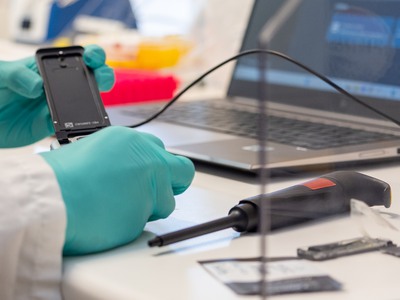
The group also uses real-time DNA sequencing with MinION, enabling genetic information to be analysed while sequencing is in progress. By combining molecular biology methods with AI, mathematical modelling and statistical analysis, the researchers can identify patterns in biological data.
This creates opportunities for faster identification of microorganisms and more accurate analyses in research and diagnostics.
The research group studies infections, inflammatory diseases and biological systems. Its research includes sepsis, glaucoma, biomarkers, plant pathogens and the analysis of complex biological data.
The research group uses molecular biology techniques and analyses large biological datasets to understand infections, inflammation and disease processes. An important part of the work is high-throughput sequencing, which makes it possible to study genetic information in detail.
The group works with two complementary techniques, among others. One is next-generation sequencing (NGS) using powerful Illumina instruments, which generate very large volumes of high-quality data. The other is third-generation sequencing (TGS) in the form of real-time DNA sequencing using MinION, which enables genetic information to be analysed while sequencing is in progress.
By combining molecular biology methods with AI, mathematical modelling and statistical analysis, the researchers can identify patterns in biological data. This creates opportunities for faster identification of microorganisms and more accurate analyses in research and diagnostics.
The research group collaborates with partners in academia, healthcare, diagnostics, life sciences, technology and agriculture. These collaborations are important because the research often involves biological samples, advanced data analysis and applications in healthcare, diagnostics and society.
The research group collaborates with several universities and research environments in Sweden and internationally, including:
In healthcare and diagnostics, the research group collaborates with organisations including:
The research group also collaborates with companies and organisations in life sciences, molecular biology, analytical methods and standardisation, including:
In research relating to plant pathogens and risk assessment, the group collaborates with organisations such as:
Biomarkers are measurable biological signals that can provide information about, for example, disease, infection or treatment response. In the Infection Biology research group, biomarkers are used, among other things, in research into earlier diagnosis of sepsis.
They are also referred to today as molecular signatures.
Multivariate statistics refers to statistical methods that analyse several variables simultaneously. In infection biology, these methods can be used to identify patterns in complex biological data.
Soil-borne plant pathogens are fungi, bacteria or other organisms in the soil that can cause diseases in plants and lead to crop losses.
Next-generation sequencing (NGS) is a technique for reading large amounts of DNA or RNA quickly and on a large scale.
Put simply, NGS can be used to map the genetic information in a sample. Instead of analysing one gene at a time, researchers can examine many genes, the entire genome, or which genes are active in cells.
MinION is a small, portable instrument used to sequence DNA and RNA, that is, to read the genetic information in biological samples.
The technology can be used for anything from mapping entire genomes to analysing microorganisms and gene expression. The instrument generates large amounts of data that are processed using advanced bioinformatics methods.
At the University of Skövde, MinION and Flongle are used within the Systems Biology research environment for research in areas including infection biology and precision diagnostics. MinION is based on nanopore sequencing, a third-generation sequencing technology that enables rapid real-time analysis.