
Maria Snögren
School of Health Sciences


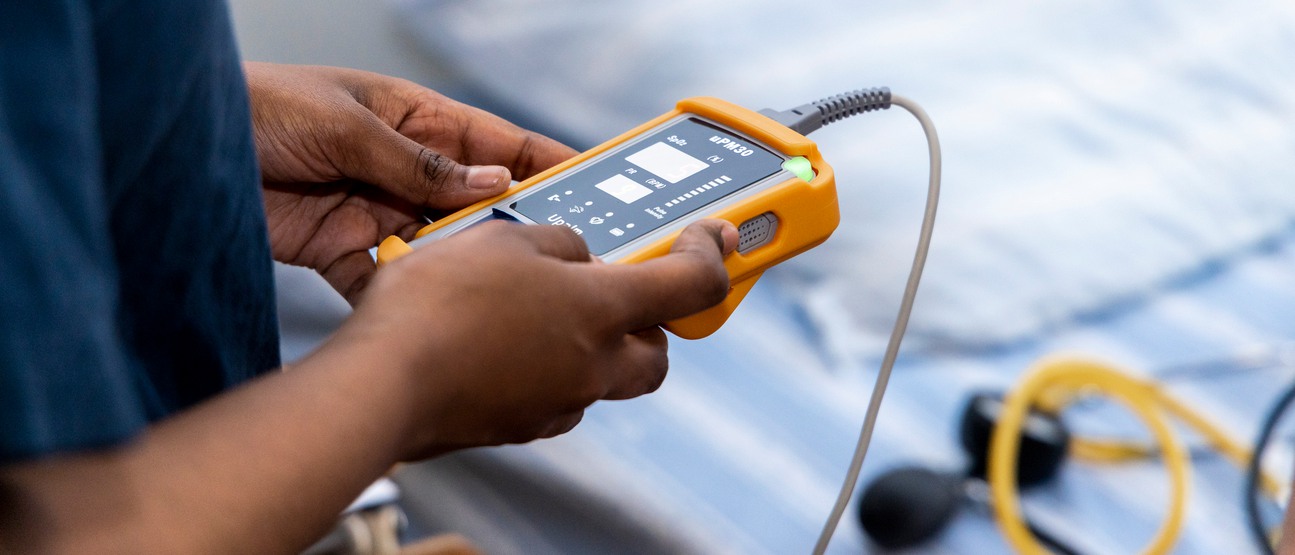
The project uses experience-based activities and modern technology to give children, young people and their guardians a clear understanding of the professions available within healthcare, how the work is carried out, and how technology is developing. The aim is to increase knowledge of the healthcare sector, reduce gender stereotypes, and help ensure that healthcare services have the staff required in the long term.

"The project creates a learning environment that values diversity and equality, thereby promoting a more inclusive societal culture and contributing to a sustainable working life within health and social care."
Maria Snögren, project leader
The healthcare initiative at Balthazar Science Centre aims to address one of society's most pressing future challenges: the supply of healthcare skills.
The project is a collaboration between:
By making the breadth, technology, and human values of healthcare visible early, in an experience-based and inclusive manner, the initiative can contribute to changed attitudes, increased knowledge, and long-term, strengthened recruitment.
The project combines pedagogical competence with modern technology and strong regional collaboration. Balthazar will become an arena where healthcare can be experienced, understood and explored – not as a problem area, but as a future industry filled with meaning, innovation and opportunities.
In this way, the foundation is laid for both individuals' future choices and society's long-term sustainability. Today, education in healthcare-related professions is dominated by women, both at upper secondary and higher education levels.
This care initiative within the Balthazar Science Centre can show different professions in healthcare for children and parents.
At the university, we actively work to avoid gender-based and stereotypical representations, so that our students can be better prepared to meet the complex and multifaceted challenges that may exist in healthcare, related to, among other things, digitalization and technological development.
It is important that children and prospective students are given the opportunity to see themselves in their future role, regardless of gender identity or background. By creating a learning environment that values diversity and equality, we can promote a more inclusive culture in society and a sustainable working life in healthcare.