Kent Salomonsson
Professor of Mechanical Engineering
School of Engineering Science

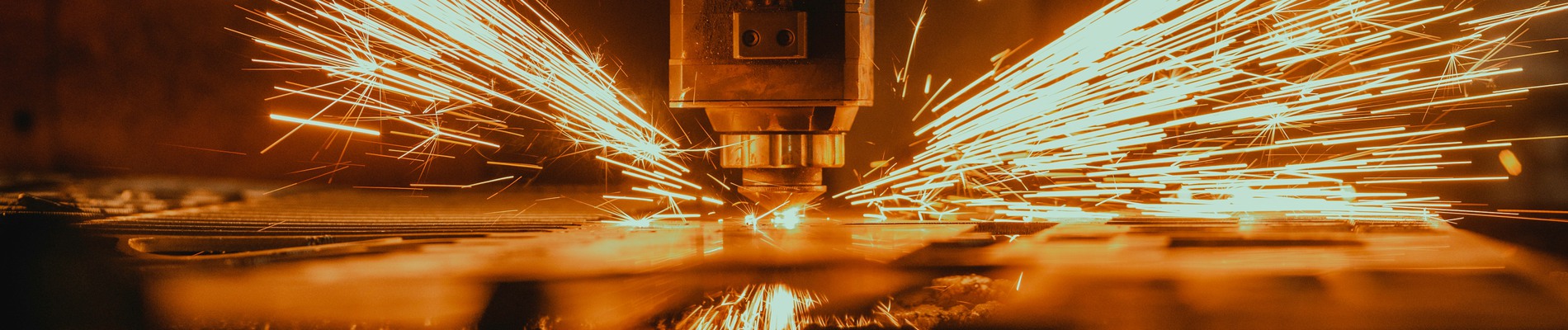
The Predictive Research in Intelligent Simulation and Manufacturing (PRISM) is a research group at the University of Skövde. We develop predictive and intelligent methods for manufacturing by combining physics-based simulation, data-driven modeling, optimization, and experimental validation.
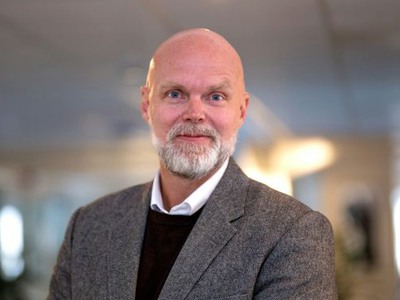
"The aim is to let engineers see how a material, a process, or an entire production system will behave before anyone builds it. Our focus: material behavior, manufacturing processes and production systems."
Kent Salomonsson, professor of mechanical engineering
PRISM brings together researchers in mechanical engineering, production engineering, physics, and information technology. The group combines expertise in manufacturing science, virtual engineering, artificial intelligence, experimental methods, optimization, and production systems to address industrial challenges across multiple scales.
We build numerical simulations of manufacturing processes that capture multiphysics behavior, with thermal, mechanical, fluid, and material interactions in the same model. These models are the basis for the digital twins we develop for process design, analysis, and engineering decision-making.
Simulating every possible configuration is rarely affordable. We use machine learning, surrogate modeling, and data fusion to explore the process space faster, then apply sensitivity analysis, uncertainty quantification, and optimization to find out which decisions still hold when conditions vary.
A model earns trust only when someone checks it against reality. We run controlled experiments, diagnostics, measurements, and material characterization to calibrate and verify our models. The experimental work also tells us which physics a model needs to capture in the first place.
We work at four levels: from how an individual material behaves to how entire production systems function, and on to the human body. The levels differ in scale, but the approach is the same. At each level, we build virtual models, analyse and optimise them, and then validate the results against real-world experiments. This means that knowledge gained at one level can be applied at the next.
Material behavior and microstructure: how a material responds to the thermal, electrical and mechanical loads a process puts on it.
Machining and material removal, laser welding, injection molding and polymer processing. Multiphysics process simulation underpins all three.
Manufacturing systems and production flow, where individual processes meet capacity, sequencing, and throughput.
Predictive modeling is not confined to industrial production. Our biomechanics research applies the same chain of simulation, calibration, and experimental validation to the human body, where material properties vary between individuals and direct measurement is limited. Problems like that sharpen the methods we bring back to manufacturing.
The research is supported by laboratory facilities at ASSAR Industrial Innovation Arena and computational infrastructure for simulation, optimization, and data-driven modeling.
The facilities support controlled manufacturing experiments and measurements of process forces, temperatures, porosity, surface integrity, and other process and material characteristics. Material characterization is performed at multiple scales.
Experimental data supports calibration and validation of simulation models and digital twins.
The research is conducted in close collaboration with industrial partners and research groups at the University of Skövde, as well as national and international research networks.
The work addresses manufacturing challenges linked to electrification, advanced materials, digitalization, production efficiency, and sustainable industrial development.
Results are developed and evaluated in industrial contexts through joint research projects, demonstrators, and knowledge exchange.
Examples of ongoing and recent projects include research in:
A digital twin is a virtual model of a physical object or process, kept in a state with its real counterpart through measured sensor or input data. In our work it means a simulation calibrated against experiments, which can then predict how a real process will behave under conditions it has not yet encountered. That is the difference between a model that illustrates and a model you can make decisions from.
A surrogate model is a fast approximation of a slow simulation, trained on a limited number of full simulation runs or experiments. It lets us search thousands of design options in the time a handful of detailed simulations would take.
A way of establishing how much confidence a prediction deserves. Material properties, machine settings, and measurements all vary, and uncertainty quantification traces how that variation propagates through to the result.