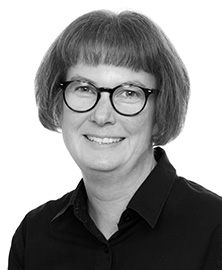
Maria Snögren
Senior Lecturer in Nursing
School of Health Sciences

The project examines how Swedish municipalities make information and support accessible to Sweden-Finnish informal caregivers. Together with caregivers and municipalities, it builds knowledge to strengthen support in Finnish. The project runs until December 2027.
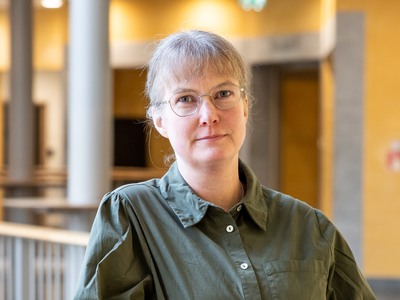
“Our findings will help municipalities reach Sweden-Finnish informal caregivers with information and support, and that knowledge will benefit other linguistically and culturally vulnerable groups too.”
Maria Snögren, senior lecturer in nursing
In many European welfare systems, including Sweden, Informal caregivers are an essential part of care provision. Belonging to a national minority, such as the Sweden Finns, includes experiences of discrimination, cultural marginalisation, and language barriers, despite legislation guaranteeing the right to receive culturally and linguistically adapted information and support.
The legislation does not specify how information and support should be designed and made accessible in practice with such adaptations, leaving room for variation and, consequently, a risk of inequality. Being an informal caregiver and a member of the Sweden Finn minority, therefore, represents a complex life situation.
This project, therefore, aims to investigate how support for family caregivers belonging to the Sweden Finn minority is made accessible, experienced, and developed in Swedish municipalities, as well as which organisational factors influence this.
A second aim is, through co-creation with family caregivers and municipal actors, to develop a knowledge base that can strengthen municipalities’ work to ensure access to information and support in Finnish, thereby contributing to linguistically and culturally adapted support.
The project uses an exploratory, mixed-methods design with elements of participatory research. The design combines multiple data sources, allowing for triangulation and multiple perspectives to provide both breadth and depth in the analysis, and to ensure that the results are relevant for both research and practice.
The project will follow the guidelines of the Declaration of Helsinki and the Swedish Ethical Review Act for research involving humans. It will be reported and evaluated in accordance with the Standards for Reporting Qualitative Research Checklist to enhance transparency.
The project’s findings will help municipalities better understand how informal caregivers belonging to the Swedish Finn minority access information and support. The results will provide knowledge relevant not only for informal caregivers belonging to the Swedish Finn minority but also for other linguistically and culturally vulnerable groups in society.