





Anna Syberfeldt
Deputy Head of School/Professor of Production Engineering
School of Engineering Science

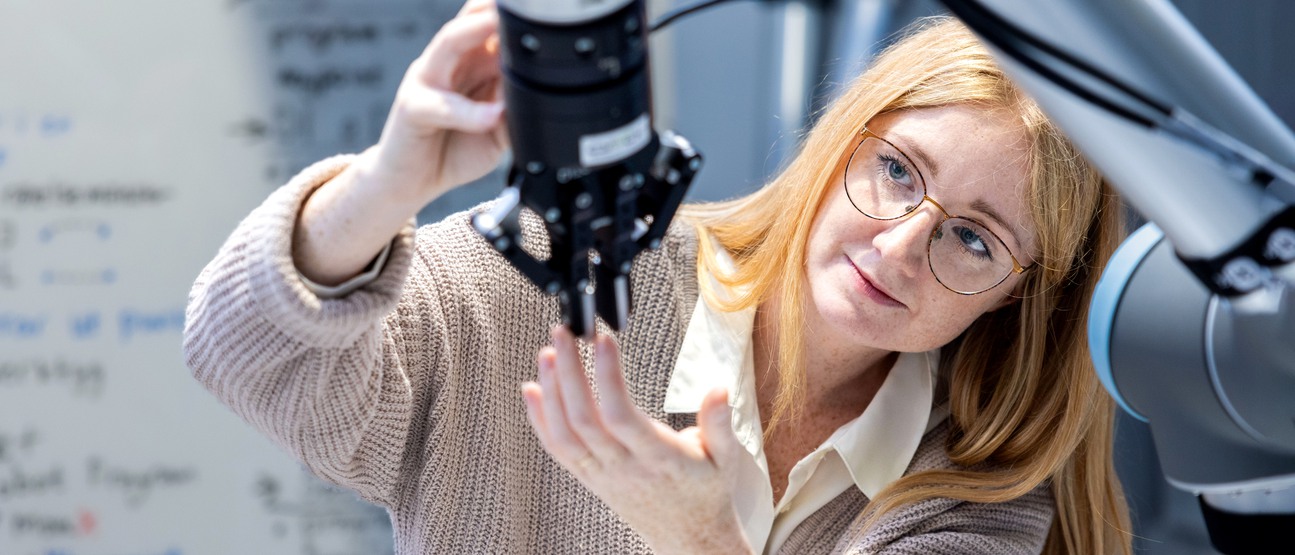
How can we develop smarter products, more efficient production systems, and sustainable technological solutions? Within the Engineering Science research environment, we combine engineering expertise with digital methods to address challenges facing industry and society.
Our research is applied and conducted in close collaboration with industry and other societal stakeholders. Through modeling, simulation, optimization, experimentation, and other engineering methods, we develop knowledge and solutions that can be put into practice.
Electrification is making the energy system more dynamic every year. ETA develops smart grids, power electronics for electric vehicles, and AI that controls energy and production within a single system.
Read more about the ETA research group.
PRISM predicts how materials, processes and production flows will behave before they are built. Physics-based simulation and machine learning provide the forecast, while controlled experiments determine whether it holds.
Read more about the PRISM research group.
New technology rarely works better than the work systems surrounding it. STEAM conducts research into work systems in which people, organisations and technology are designed together: simulation as decision support, digital human modelling, and the operator’s role in digital industry.
Read more about the STEAM research group.
Together, the groups span a broad engineering research environment in which digital and physical methods are combined.
The research covers areas including the production systems of the future, optimisation of design and manufacturing methods, ergonomics and user-centred product development, sustainable power and energy systems, and decision support for transformation in healthcare and regional development.
"By creating digital representations of, for example, products, people, production systems and processes, we can analyse and evaluate different solutions before they are implemented in practice."
Anna Syberfeldt, representative for the research environment and professor of production engineering
One of the strengths of our research environment is our expertise in computer-based models and virtual methods.
Modeling, simulation, and optimisation make it possible to investigate complex relationships, compare alternatives, and make better-informed decisions.
This can contribute to shorter development times, more efficient use of resources, improved working environments, and more sustainable products and production systems.
At the same time, the research environment encompasses a broader range of engineering research questions and methods. What unites our research is the ambition to develop knowledge that helps solve real-world problems and meet future needs in industry and society.
A large proportion of the research within Engineering Science is conducted in collaboration with companies and other external partners. By starting from real-world needs and challenges, we can develop and test new knowledge, methods, and technological solutions in relevant contexts.
An important arena for this collaboration is ASSAR Industrial Innovation Arena, where research, education, and innovation come together. Here, ideas, methods, and technologies can be developed and demonstrated using experimental equipment, demonstrators, and other resources.
Through collaboration, we create the conditions for research results to be put into practice and contribute to innovation, skills development, competitiveness, and sustainable societal development.
Our research is closely linked to the study programs offered by the School of Engineering Science. New knowledge, methods, and current research questions are integrated into our education, giving students opportunities to engage with technological developments and the challenges they will encounter in their professional lives.
At the same time, education contributes to research by bringing together students, researchers, teachers, and external partners. This creates an environment in which research and education develop and strengthen each other. We offer education from undergraduate level through to doctoral studies.
We also support lifelong learning through standalone courses designed for working professionals.