Search results

    Search results

    Show all results for ""
    Can not find any results or suggestions for ""

    Search tips

    • Make sure there are no spelling errors
    • Try different search terms or synonyms
    • Narrow your search for more hits

    How can we help?

    Contact Us

    Find Employees

    University of Skövde, link to startpage

    Search results

      Search results

      Show all results for ""
      Can not find any results or suggestions for ""

      Search tips

      • Make sure there are no spelling errors
      • Try different search terms or synonyms
      • Narrow your search for more hits

      How can we help?

      Contact Us

      Find Employees

      University of Skövde, link to startpage

      BeeMicro 2

      Research Group Ecological Modeling
      Resarch Environment Systems Biology

      BeeMicro 2

      Research Group Ecological Modeling
      Resarch Environment Systems Biology

      Quick Facts

      Full project name

      The importance of gut flora in Swedish honey bees (Apis mellifera) after overwintering – second season: effects of European foulbrood

      Duration

      January 2026 – December 2026

      Funding and collaboration

      Swedish Board of Agriculture

      How does winter feed affect honeybees’ gut flora, health and chances of surviving the Swedish winter? BeeMicro 2 investigates how different diets – honey, sugar and a mixture – interact with the bees’ microbiome and diseases such as European foulbrood, with the aim of giving beekeepers better knowledge to support stronger colonies.
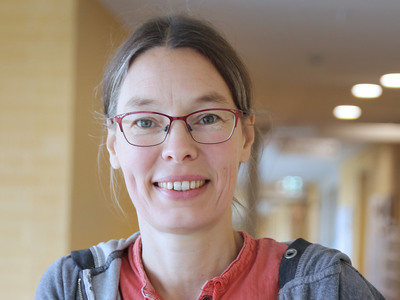
      "We want to increase knowledge about how different types of winter feed affect honeybees. We do this by investigating how the feed influences the composition of the gut flora, survival, spring development and resistance to diseases such as European foulbrood. Through the project, we hope to provide knowledge that helps beekeepers make more sustainable decisions for both the bees and the ecosystems around us."

      Sonja Leidenberger, Project leader and Senior Lecturer in Bioscience

      Today, it is unclear how different overwintering diets affect the microbial gut flora of honeybees and thus their ability to survive the long Swedish winters.

      Greater knowledge of bees’ gut flora

      The goal of this project is to fill this knowledge gap by:

      1. analyzing the gut microbiome of Swedish honey bees (Apis mellifera) during another winter season (2025-2026) to better capture the natural variation in the gut flora
      2. using our newly developed Bayesian model to perform in-depth analyses of how the gut flora differs with respect to the bacterial species we find and their percentage shares of the gut flora, given the bees' different diets (honey, sugar, mix) during the winter
      3. investigating how European foulbrood affects the gut flora and bee health and
      4. investigating how different diets affect bee health at the beginning of the new season.

      Different overwintering diets affect the bee health

      We expect that our study will provide deep insight into how different overwintering diets affect the gut flora and thereby the bee health and survival. Our preliminary results show that honey bees fed with sugar differ in their microbiome from bees wintered on honey or "mix".

      In addition to collecting basic research data on the gut microbiome of the Swedish honey bee, the optimal diet for Swedish bees will also be identified by increasing the sample size. Winter mortality is costly, both for the professional beekeeper and the recreational beekeeper, but even a delayed start to spring can be negative or suboptimal.

      Sustainable solutions beekeeping challenges

      An important part of the project is also to communicate the results, both in a scientific but above all popular science way, so that the collected knowledge will benefit the beekeeping sector in Sweden. In summary, we want to carry out this effort to address a critical challenge in Swedish beekeeping, fill an important knowledge gap and contribute to sustainable solutions that benefit both beekeepers and our ecosystems at large and in the long term.

      Workshop – 4 December 2026

      On 4 December, from 9am to 12 noon, we are holding an exciting workshop on the importance of gut flora for Swedish honeybees.

      Register for the workshop

      Project leader

      Senior Lecturer in Bioscience

      Participating Researchers

      Published: 7/1/2026
      Edited: 7/1/2026
      Responsible: webmaster@his.se