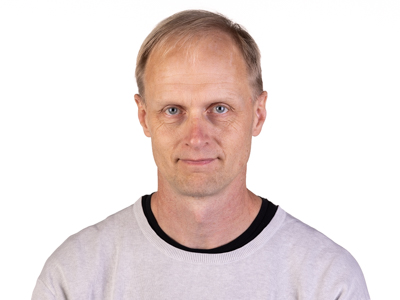
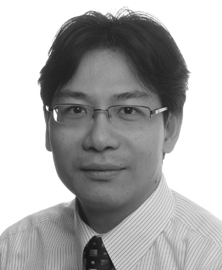
Amos Ng
Professor of Automation Engineering
School of Engineering Science


Electrical Engineering and Automation (ETA or η) is a research group at the University of Skövde, within the School of Engineering Sciences. We develop methods and technology for the electrification of industry and society, from smart grids, power electronics for electric vehicles and AI-driven energy, production and automation systems management.
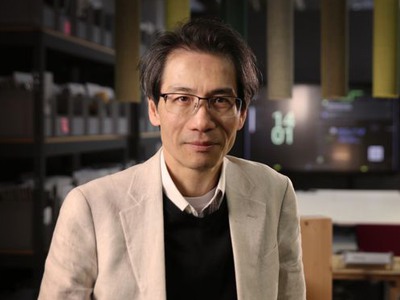
"By combining production modeling and electric power engineering with simulation-based and knowledge-driven optimisation using virtual factory models and digital twins, we let industry test new solutions in virtual testbeds before they are built."
Amos Ng, professor of automation engineering
ETA is part of Virtual Engineering, one of the University of Skövde’s strategically prioritized research environments, and that shapes how we approach production, automation and energy systems.
The group combines expertise in electric power components and systems, production and automation engineering with the research environment’s strengths in simulation, digital twins, optimization and data-driven engineering.
The group also builds on the research profile Virtual Factories with Knowledge-Driven Optimization (VF-KDO, 2018–2026) funded by the Knowledge Foundation of Sweden (KKS), in which methods for simulation-based optimization of production and supply-chain systems were developed and validated together with industry.
We build digital models of grids and energy systems and electrified production and automation systems. The models let us study how an integrated energy and production system behaves, and optimize their design and performance, before anything is installed. Once calibrated, the same models become digital twins where partners can provide real-time data to further optimize the real counterparts’ operations.
Virtual factory models let us test thousands of design and operating alternatives without disturbing real production. We couple them with multi-objective optimisation to find the best trade-offs between goals that pull in different directions, such as throughput, lead time, cost and energy use.
Knowledge-driven optimisation (KDO), developed at the University of Skövde, then applies data mining to the optimization results to reveal which decisions matter and why.
The outcome is not only a set of optimal solutions, but knowledge that engineers can understand, store in knowledge graphs and reuse in the next decision.
Connected to digital twins, the same approach supports decisions during operation, not only at the design stage.
Energy systems with renewable generation, storage and flexible loads change from minute to minute. We use data analysis, optimisation and AI to manage them in real time: deciding when energy should be produced, stored or used, and finding where flexibility creates the most value.
A method is only useful if it works on real equipment. We develop prototypes and validate them in the laboratory (at campus and ASSAR) and in industrial settings, through joint application studies with the partners who will use the results. That keeps the research tied to real operational needs and produces solutions that can actually be implemented.
The research is supported by laboratory facilities at ASSAR Industrial Innovation Arena in Skövde, a meeting point for education, research and innovation shared by Volvo, IDC West Sweden and the University of Skövde.
The Next Generation Lab provides advanced laboratory facilities and testing environments for power electronics and energy-aware production. The group also works with a SCADA-based multi-energy management platform, EMS prototypes and validated digital models developed in the HelioS Energy Hub project, which form the basis for studies of real-time optimisation, renewable integration and flexibility.
The research is conducted in close collaboration with industrial and regional partners, including Volvo GTO, Västra Götalandsregionen and IDC West Sweden, and with the other research groups in Engineering Science.
The work addresses challenges such as energy-efficient production, production and supply-chain decision-making, electrified transport, renewable energy integration and operational optimisation in industry.
Research is funded through competitive grants from, among others, KKS, Vinnova, ÅForsk and Västra Götalandsregionen.
Results also flow into education. Simulation-based and knowledge-driven optimization for production and automation systems as well as smart power and energy systems, power electronics for mobility and digitalized energy management are built into undergraduate and advanced-level teaching in electrical engineering and automation subjects, helping to supply the competence Swedish industry needs.
Simulation-based optimisation connects a simulation model, such as a virtual factory, to an optimization algorithm that searches automatically for the best settings. When several goals compete, for instance output against energy use, multi-objective optimization finds the whole set of best trade-offs so decision-makers can choose among them.
Knowledge-driven optimisation (KDO) is a methodology developed at the University of Skövde that combines simulation-based multi-objective optimization with data mining. Instead of stopping at the optimal solutions, it extracts the patterns and decision rules behind them, so the knowledge can be reused in manufacturing, supply-chain and healthcare systems.
An EMS is software that monitors and controls how energy flows through a building, a site or a grid. An AI-driven EMS adds forecasts and optimisation, so it can decide when to use, store or sell energy to cut costs and emissions while keeping supply reliable.
Power electronics is the technology that converts and controls electric power using semiconductor switches. It sits in every electric vehicle, charger, inverter and battery system, and its efficiency largely decides how much energy is lost on the way.
SCADA (Supervisory Control and Data Acquisition) is a system for collecting measurements and controlling equipment across a plant or network from one place. In our work it connects sensors, storage and energy converters to the algorithms that optimise them.

School of Engineering Science