
Peter Thorvald
Professor of Product Design Engineering
School of Engineering Science

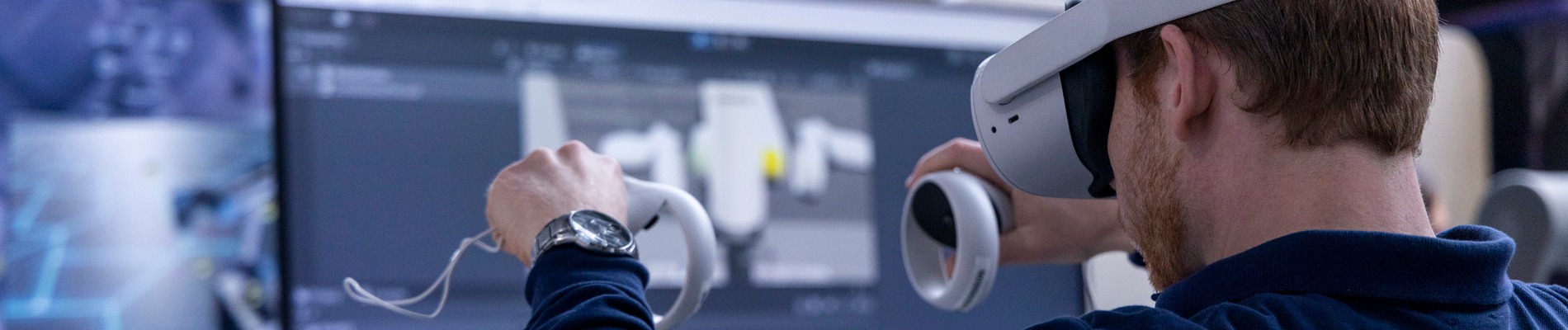
Socio-Technical Systems Engineering (STEAM) is a research group at the University of Skövde focusing on socio-technical systems: work systems in which people and technology work together to produce results.
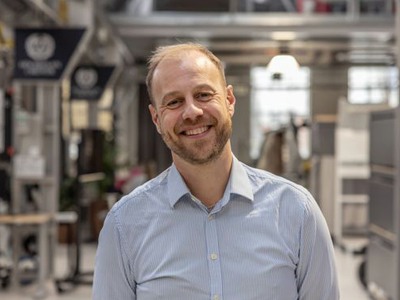
"We investigate how socio-technical systems can be understood, designed and improved from a holistic perspective. We carry out this work in close collaboration with industry and the public sector, often within the ASSAR innovation environment in Skövde."
Peter Thorvald, professor of product design engineering
A socio-technical system is a work system in which people and technology work together to produce results. The two components influence each other, and they need to be designed through an integrated process in which the technology is developed with due consideration for human capabilities and limitations.
The system consists of two interwoven components:
In industry and society, people and technology interact and form part of the same systems. Automation, AI and digital tools support or take over an increasing number of tasks, but it is people’s expertise, the way work is organised and how well organisations function that determine whether the technology actually delivers the intended outcomes.
This is why investments in technology often have less impact than expected. The problem rarely lies in the technology itself, but rather in how it interacts with the people and the operations around it. Our research focuses precisely on this relationship.
STEAM focuses on three interconnected areas.
We develop simulation and optimisation models to support decision-making in complex production and operational systems. This makes it possible to investigate the consequences of a decision before it is implemented in practice. Using discrete-event simulation, multi-objective optimisation and system dynamics, we analyse how different decisions affect productivity, costs and sustainability, and we use interactive visualisation to make the results understandable to decision-makers, engineers and managers.
We also work with digital human modelling. This enables workplaces and products to be evaluated in virtual environments at an early stage, with ergonomics and productivity considered together. It allows us to identify physical strain and other problems while they are still easy to address.
A third area of focus is the role of people in digital industry: cognitive workload, work instructions and operator support, as well as how information systems and data can support better decision-making. These areas are brought together through a transdisciplinary engineering approach and close collaboration with industry and the public sector.
We not only study socio-technical systems, but also help to develop them. Our work follows four steps:
We conduct a large part of our research together with companies and public-sector organisations, often at ASSAR Industrial Innovation Arena, a collaborative environment for industrial digitalisation in Skövde. Our partners include organisations in the automotive industry, manufacturing industry, and health and healthcare.