
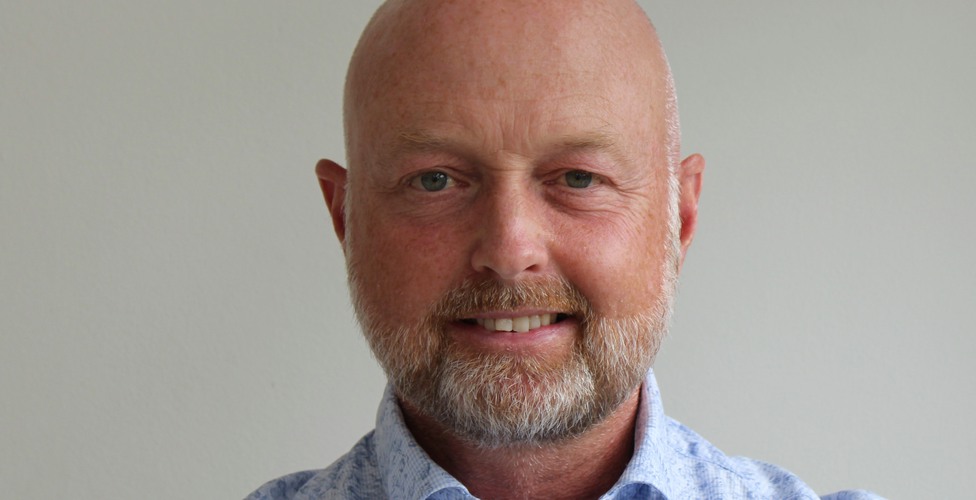
When Max Wessfeldt woke up in his home in Malmö on that dark November morning nearly three years ago, his entire back was in pain. The sensation was unlike anything he had experienced before.
“The back pain came out of nowhere. My wife, who sometimes suffers from back pain herself, told me to do some stretching exercises, and I took some pain relief. I was supposed to drive to Oslo to meet clients.”
At the time, Max was self-employed, so he set off for the meeting. However, he soon drove home again.
“By then, I was in so much pain that I couldn’t even get out of the car. I got an appointment with a chiropractor, and it hurt when he adjusted my back. In addition to the pain in my back, one of my buttocks had started to become sore. I stayed at home for two or three days, taking painkillers, but they didn’t relieve the pain. Then I took some morphine that I happened to have at home.”
Max explains that after taking the morphine he vomited. Vomiting is one of the many symptoms of sepsis. Max assumed the morphine was making him sick and therefore stopped taking it.
Towards the end of the week, his wife insisted that he seek medical attention again, and Max was given an appointment at a health centre.
“But the doctor didn’t even examine me. He said I couldn’t tolerate morphine because I had been vomiting, prescribed Ibuprofen and Paracetamol for the pain, and told me to rest.”
Wondering How Much Time He Had Left
Just one week after the party, Max’s condition deteriorated significantly. He was in severe pain and struggled to tolerate the light in the room. At that point, he realised that the healthcare services needed to take a blood test. By then, his buttock had also become badly swollen.
“I was given an emergency appointment at the health centre, and one of my sons drove me there. The blood test showed a serious infection, and the doctor said I had to go to hospital immediately.”
At the emergency department, staff were waiting to receive Max and immediately began taking various tests. A new blood test showed that his values were deteriorating rapidly. (Max’s ESR was 565; the normal value for a man is below 15.)
“They tried to identify the source of the pain and infection with a CT scan, but it showed nothing. I was then scheduled for an MRI scan, but I was in such pain that I couldn’t even lie on a hospital trolley. After receiving more pain relief, I underwent the MRI and lay in the scanner for one hour and twenty minutes.”
He Will Never Forget the Doctors’ Expressions
Max will never forget what he saw when he emerged from the scan.
“There were four doctors standing there, all looking at one another. I wondered how many months I had left to live.”
The scan revealed a massive accumulation of pus extending from the first to the last vertebra, as well as pus in one buttock. Max was now critically ill, and the immediate focus was to bring down his fever and inflammation levels before surgery could be performed. The operation lasted six hours, and the surgeons had to open up five different areas along his spine and in his buttock to remove the large amount of pus.
“They had to cut into the vertebrae to reach the pus. After the operation, the swelling didn’t go down, so the pain remained unbearable. The morphine didn’t help. Eventually, the swelling was reduced with the help of corticosteroids.”
Max then remained on the hospital’s Infectious Diseases Ward for four weeks.
“It was only then that they mentioned sepsis to me,” says Max.
The Importance of Raising Awareness of Sepsis
Max is now the secretary of a newly established Sepsis Association and stresses the importance of spreading information and knowledge about sepsis.
“I now have a much better understanding of what sepsis is, and I feel incredibly grateful that I didn’t go into septic shock and have to undergo an amputation. I do still experience back pain from time to time, but I can live a normal life and, above all, play golf – and for that I am immensely grateful.”