
New research from the University of Skövde shows how artificial intelligence and factory data can be used to identify production bottlenecks, detect defective products and spot machine wear before it leads to breakdowns. In his doctoral research, Mahesh Kumbhar has developed AI-based methods designed to improve productivity, quality and reliability in manufacturing.
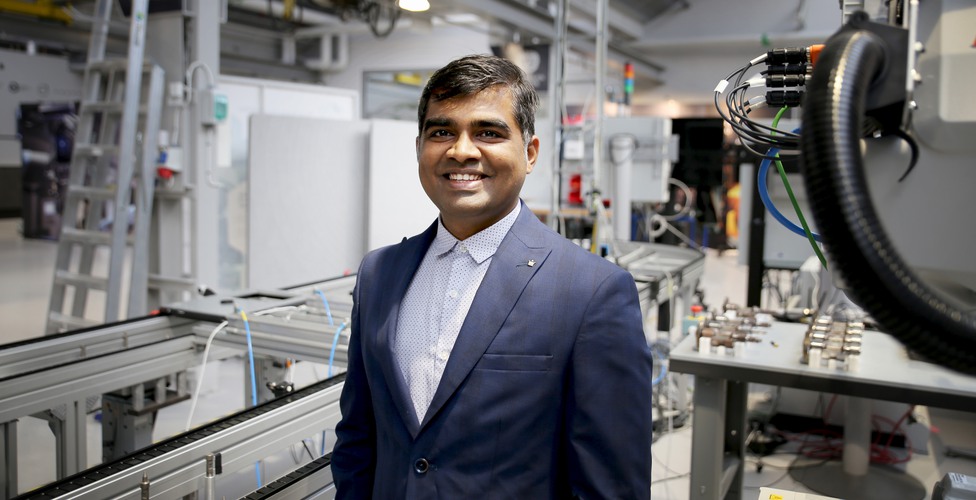
“The findings could help manufacturing companies reduce downtime, waste from defective products and unexpected machine failures. This can lower costs, but it can also contribute to more efficient use of materials and energy,” says Mahesh Kumbhar.
Using AI to unlock the value of factory data
Modern factories collect large amounts of data. The challenge is that this information is often spread across different systems and is therefore not used to its full potential.
“Capturing data is easier than turning it into something that actually improves the bottom line,” says Mahesh Kumbhar, PhD student at the School of Engineering Science at the University of Skövde.
His research explores how data and AI can be used to answer some very practical questions in manufacturing: Which machine is slowing production down? Why are defective products being produced? And can signs of wear be detected before a machine component fails?
Three methods for smarter production
Mahesh Kumbhar’s research has resulted in three main types of tools.
The first creates a digital model of a factory to identify which machine is creating delays and to suggest possible improvements. In tests, the method increased production output by up to 18 per cent and reduced energy consumption by 1 percent.
The second method helps AI systems detect rare defective products more reliably, even when there are only a few faulty examples available for the system to learn from.
The third uses vibration data to detect wear in machine components and identify the source of a fault before it causes a breakdown. Detecting these problems early could, in some cases, prevent the loss of an entire day of production.
Real factory data is rarely perfect
An important part of the research has been working with data from real industrial environments.
“Real factory data is much messier than you would expect from a textbook. Information can be missing, incomplete or recorded in ways that do not perfectly reflect the actual process,” says Mahesh Kumbhar.
Many existing methods have mainly been tested on artificial or benchmark datasets. A key part of his work has therefore been to develop methods that can handle the imperfect and incomplete data found in real manufacturing environments.
Benefits for both industry and sustainability
The next step is to test the methods in more factories and industries to see how well they perform in different environments. Mahesh Kumbhar also wants to make the tools more automated over time, for example by allowing systems not only to flag a problem, but also to suggest maintenance actions in real time.
On 12 October, Mahesh Kumbhar will defend his doctoral thesis at ASSAR Industrial Innovation Arena. Link to the livestream will be published in the University's calendar.