
Research from the University of Skövde shows that today’s digital design tools in the automotive industry can impair collaboration between engineers. New functions are needed in digital design tools to better support for collaboration in shared virtual environments.
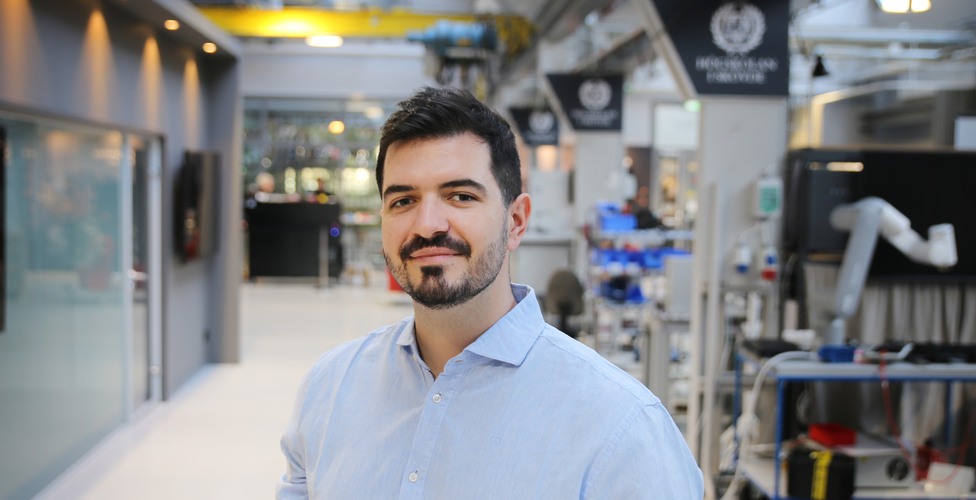
Francisco Garcia Rivera's research can make a change for collaboration problems in the automotive industry.
Engineers in the automotive industry use digital models to review products before anything is physically built. However, the tools used (videoconferencing tools to share the screen with the 3d models) were not actually developed to support collaboration during design reviews.
This is demonstrated in new research from the University of Skövde, where doctoral student Francisco Garcia Rivera investigated how advanced 3D tools and extended reality technology affect communication between engineers and designers.
“The tools used today were never specifically designed for design reviews,” says Francisco Garcia Rivera.
Greater freedom can get in the way of collaboration?
One finding stood out in particular in the research; When all participants were able to control their own views of the product model in the videoconference, it became more difficult for teams to focus on the same issue simultaneously during discussions.
“The most important thing is not complete independence or complete shared control, but the ability to switch smoothly between the two,” he says.
During observations of design reviews at a Swedish automotive company, Francisco identified four recurring collaboration problems. Participants struggled to display the correct views of the model, indicate which parts they were referring to, discuss possible design changes, and assess the ergonomics of the design.
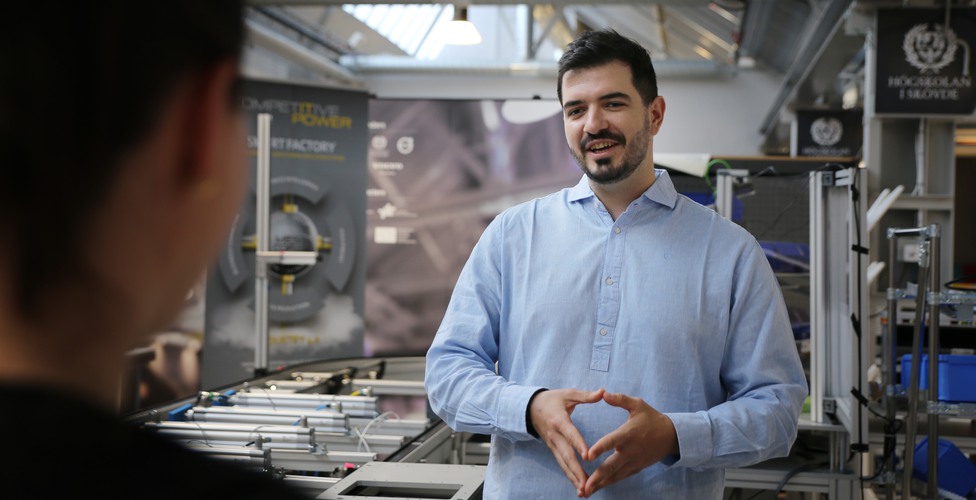
Francisco Garcia Rivera defends his doctoral thesis at ASSAR, May 28th 2026.
New Functions Needed in Digital Design Tools
The research therefore shows that future design review tools need better support for collaboration in shared virtual environments. Among other things, functions are needed that allow participants to point to and sketch directly on the 3D model, as well as the possibility to navigate individually while also being able to follow a shared presenter when required.
The next step in the research is to investigate how the framework can be applied in more industries and integrated with companies’ existing engineering systems.
“Introducing new tools into engineering organisations is also about how people learn, adapt, and develop new ways of working,” says Francisco Garcia Rivera.
On 28 May, Francisco Garcia Rivera will defend his doctoral thesis at ASSAR Industrial Innovation Arena.