To build a bridge between the needs of the Swedish game industry and academic research. That’s the main goal of the Game Development Research Centre. It is a five-year project that brings together four Swedish universities and major stakeholders within the Swedish games industry.
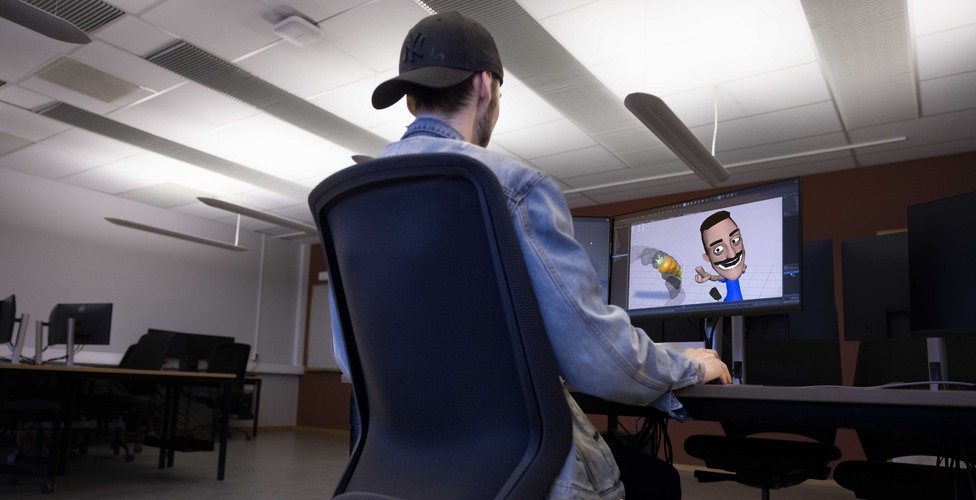
In a landmark move to bolster Sweden’s position in the global games industry, the University of Skövde, Malmö University, Blekinge Institute of Technology and Karlstad University will establish the Game Development Research Centre (GDRC). The Swedish Knowledge Foundation is the main funder of the initiative.
Specifically designed for the games industry
GDRC aims to strengthen Sweden’s position as a leading game development nation by providing the game industry with its own dedicated research base. It is a much-needed initiative because of the unique nature of the games industry. While other industry sectors rely heavily on infrastructure or physical resources, the most valuable asset in game development is creativity.

“GDRC is specifically designed to conduct research within this unique field. We will now have the opportunity to establish game development as a research domain in its own right. And that’s about time, considering how interesting and successful our Swedish games industry is.”
Per Backlund, professor
A pioneering project
The Knowledge Foundation (KK-stiftelsen), which is investing more than SEK 29 million, is the main funder of the initiative. Although the The Knowledge Foundation has extensive experience in financing collaborative projects between academia and industry, the investment in GDRC is unique.
“With this investment, we aim to enable the development of new collaboration models tailored to the unique conditions of the games industry. The initiative lays the foundation for long-term partnerships that are crucial for Sweden to maintain and strengthen its leading position in game development, says Eva Schelin,” CEO of the Knowledge Foundation.
Valuable for science and industry
The Swedish games industry is dominated by micro-enterprise; almost 90% of companies have fewer than ten employees. Despite their size, these small studios can achieve major commercial success. GDRC aims to make it possible for these kinds of successful micro-enterprises to engage in long-term research and thus gain access to cutting-edge knowledge.
“Through GDRC, researchers and companies can collaborate from the very start of the research process. This enables the partners to identify research questions and produce results that are both directly useful for the companies involved and scientifically valuable,” says Per Backlund.
A national hub for game development research
The games industry is still young and has a unique structure. The traditional methods of collaboration used between universities and other Swedish export industries are ill-suited for the games industry. Through GDRC, however, more suitable methods for collaboration can be developed.
“With this project, we are establishing a national hub for Swedish game development research. We bring together researchers and game companies from across Sweden to strengthen the competitiveness of the Swedish games industry. The University of Skövde is taking a leading role in the project thanks to our strong local game development ecosystem. However, it is the funding from the Swedish Knowledge Foundation that makes this joint initiative possible,” says Tehseen Aslam, Deputy Vice-Chancellor for Collaboration at the University of Skövde.
Facts: The Game Development Research Centre (GDRC)
- Project time: Five years, 2026-2031
- Main Funder: The Swedish Knowledge Foundation
- Academic partners: University of Skövde, Malmö University, Blekinge Institute of Technology and Karlstad University
- Industry and research partners: EA Digital Illusions, Divine Robot, Llama Lane, Cygames, F-Mad AB, Coffee Stain Studios, Okatima, Modl.ai, Stunlock Studios AB, Embracer Games Archive, GOALS, Ubisoft Sweden (Massive), Reactional Music Group, Game Habitat, Science Park Skövde, Healthygaming, RISE, Dataspelsbranschen