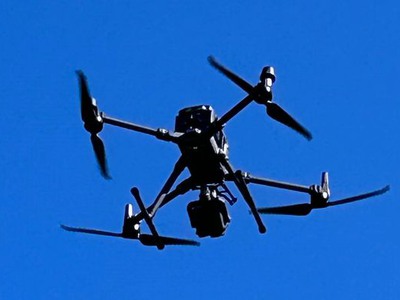
Drones are often associated with attacks in war zones. But at the University of Skövde, researchers are leading a European project that shows how the same technology can save lives and support emergency response in peacetime – from the rapid delivery of defibrillators to providing an overview during fires and floods.
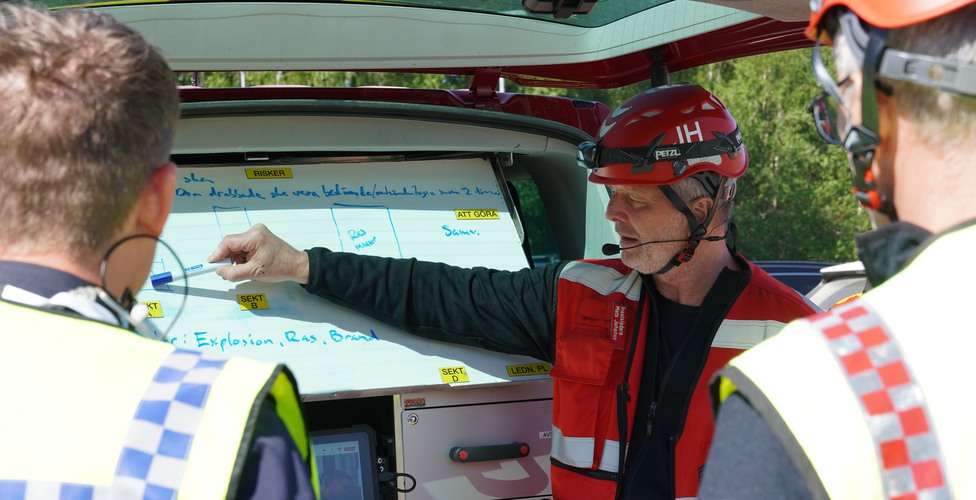
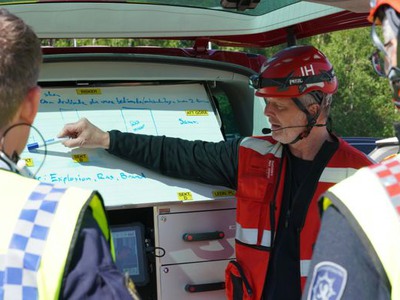
When an accident occurs, time is of essence. Within the research project COLLARIS2, the University of Skövde is working together with emergency services and researchers across Europe to enable the effective use of drone technology in rescue operations.
Drones First on the Scene
The aim of COLLARIS2 is to develop knowledge, training and working methods that allow drones to be used to their full potential in crisis management, whether it involves locating missing persons, fighting fires or rapidly transporting medical equipment.
“Drones are important and sometimes crucial for saving lives, but their use can be developed much further. It largely comes down to how we organise and cooperate between different organisations during a rescue operation,” says Cecilia Hammar Wijkmark, researcher at the University of Skövde.
Better Coordination Is Required
Today, drones are used by rescue services and the police, for example to assess fire risks, search for missing persons or inspect collapsed buildings. Drones can also be used to measure gases, disseminate information via loudspeakers and deliver life-saving equipment, while quickly providing an overview of the incident site.
Despite the great potential, their use is often on a limited scale. In many operations, only one drone is used at a time, even though different organisations may need several drones simultaneously, sometimes in combination with manned helicopters. For this to work, clear procedures, training and regular exercises are required.
“A major challenge is coordinating multiple drones and manned helicopters from different organisations. Once procedures are in place, they also need to be practised and rehearsed,” says Cecilia Hammar Wijkmark.
European Drone Teams
COLLARIS2 is a research and development project within the EU Civil Protection Mechanism and brings together organisations from, among others, Poland, the Netherlands, France, Cyprus and Greece. The aim is to build a strong international network in which rescue services, authorities and researchers share experiences and develop common working methods.
“Many challenges are shared regardless of the country. At the same time, it is important to understand differences and to standardise what is possible. There is also a need to build up drone teams that can be deployed across the EU when a country requests assistance in situations such as earthquakes, wildfires or floods,” says Cecilia Hammar Wijkmark.
Virtual Training for Real Crises
A central part of the University’s work in the project is the development of virtual training environments. In digital simulations, incident commanders and operators can train to manage complex operations in which people, technology and data interact under pressure.
The virtual environments also allow coordination between multiple drones and helicopters to be practised – cost-effectively and without risk to life or equipment.
“Virtual exercises make it possible to build competence and practise scenarios that would otherwise be too dangerous, expensive or difficult to recreate in real life. This strengthens both preparedness and the ability to act when it really matters,” says Cecilia Hammar Wijkmark.
From Military Technology to Societal Benefit
COLLARIS2 demonstrates how research can quickly be translated into tangible societal benefit. By developing shared methods, training programmes and guidelines, the project aims to make it easier for more actors to use drones in a safe, efficient and coordinated manner.

“Together, we want to strengthen Europe’s crisis preparedness and show how drone technology, which is perhaps often associated with weapons and war, can save lives in peacetime”
Cecilia Hammar Wijkmark, Post-Doctor in Informatics